Thursday, October 24, 2024

Comfort and Joy


Comfort and Joy

As we dive into the holiday season, expectations seem to multiply. With full calendars, shopping lists, and gatherings, it’s easy to feel overwhelmed. Amidst this flurry of activity, kindness toward others can become an afterthought, and the first to diminish is often kindness toward ourselves. This neglect takes a toll on well-being and impacts the release of the brain’s feel-good hormones: dopamine, serotonin, endorphins, and oxytocin. These chemicals are designed to work in bursts, not as a constant stream, yet we’re pressured to stay upbeat as if being down is something to fix.

Each hormone plays a unique role in lifting mood. Dopamine rewards task completion—like checking off a to-do list. Serotonin stabilizes mood through walking, meditation, or time outdoors. Endorphins, released during laughter or exercise, reduce pain, while oxytocin, the bonding hormone, is triggered by connection—through a hug, petting an animal, or kindness. These moments offer brief but powerful boosts, never meant to sustain us indefinitely.

Dr. Loretta Breuning, founder of the Inner Mammal Institute, emphasizes that happiness isn’t constant. “You don’t build the skill [of happiness] when you're taught it should be effortless,” she explains. Dr. IsHak, a psychiatry professor at Cedars-Sinai, adds, “Acts of kindness must be repeated. Biochemically, you can’t live on the 3-4 minute oxytocin boost from a single act.” Kindness works best when practiced regularly—whether by holding the door for someone or sharing a smile.

One of my favorite memories with my first dog Sophie captures this perfectly. While walking through Elm Grove Park, I found a quiet bench donated by the Sane family, with a plaque that read, “Be kind whenever possible. It is always possible.” — Dalai Lama. Feeling grateful, I placed Sophie on the bench, her white fur bright against a pink bow, and took a photo I’ll always cherish. It reminded me that kindness and gratitude often come in the quietest ways.

As the season unfolds, music offers a cue to slow down: “The weather outside is frightful, but if you’ll really hold me tight, all the way home I’ll be warm.” Dean Martin’s lyrics capture how trust and kindness carry us through cold patches. Happiness isn’t about constant joy but about finding beauty in moments of connection, kindness, and gratitude.

This season, let’s embrace life’s natural rhythms and be kind to ourselves and others. Happiness isn’t about being joyful every moment—it’s about finding beauty in small acts of connection, kindness, and gratitude along the way. Wishing you comfort and joy this winter.


True Colors - Light and Health

Artists have long harnessed color and light to evoke emotions, so it's no surprise that medicine is now exploring how these elements affect our bodies. As Paul Simon famously sang, “Kodachrome gives us those nice bright colors; the greens of summer. Oh Mama, don’t take that Kodachrome away!” He was onto something. Let’s take a brief autumn stroll through the history and recent findings on phototherapy before the leaves come tumbling down!

Dr. Ibrahim from the University of Arizona was inspired by the light filtering through trees to investigate green light. Forest bathing, an ancient practice of immersing oneself in nature, is known to enhance overall well-being. Research shows that “basking in green light for 1 to 2 hours a day could significantly reduce pain from migraines and fibromyalgia.” In his 2021 study, Dr. Ibrahim found that green light reduced migraine frequency from 7.9 to 2.4 episodes for those with episodic migraines and from 22.3 to 9.4 for those with chronic migraines. Additionally, fibromyalgia patients reported a decrease in pain from 8.4 to 4.9 on a 10-point scale. Similar results were observed at Duke University, where Dr. Gulur studied green light’s effects on pain. Fibromyalgia patients who wore green-lens glasses for at least 4 hours a day showed a 33% reduction in opioid use. Dr. Gulur supports the idea that green light helps reduce pain, though the specific frequencies used may not be available in over-the-counter products.

Red light and infrared therapy are well-established for aiding muscle recovery. Dr. Ghigaiarelli discovered an 18% reduction in blood levels of creatine kinase (an inflammatory marker) in athletes who rested in a red-light recovery bed compared to those who used a non-light bed.

Light therapy is also well-known for treating newborn jaundice, psoriasis, and seasonal affective disorder. It’s especially promising for conditions with limited treatment options. The LIGHTSITE III study, conducted at 10 U.S. ophthalmology centers, used a combination of red, near-infrared, and yellow light for dry age-related macular degeneration (AMD). “This was the first therapy for dry AMD that’s shown a benefit in improving vision,” concluded Dr. Richard Rosen. For those with wet AMD, consult your doctor about AREDS supplements and injections, which may help slow vision loss. Always seek medical advice before using light therapy for vision issues.

As the leaves begin to fall this November, savor the vibrant colors of autumn, knowing that these hues offer more than meets the eye.


The October Slide

You’ve never heard of the October Slide? No, it’s not about the Giant Slide at this year’s State Fair, nor is it a new dance move! Unfortunately, the October Slide is a term that has become synonymous with a flare in chronic medical symptoms as autumn approaches.


Factors believed to contribute are: falling temperatures, changes in barometric pressure, drier air, seasonal allergies, less daylight and increase in virus susceptibility as we all head indoors. The changes in barometric pressure can have a direct effect on our bodies, and some people are more sensitive to these changes, leading to an increase in inflammatory responses. Additionally, school-aged children face the added burden of academic stress as the school year progresses.

The October Slide gained momentum within the chronic illness community as they shared their stories with each other. While it isn’t a firm diagnosis it is a pattern recognized by most physicians. Most chronic illnesses may be exacerbated by the change in weather; including but not limited to fibromyalgia, headaches, rheumatoid disorders, chronic fatigue, dysautonomia and depression. You may not have heard of the October Slide, but you might have experienced it for years, unaware that you’re not alone. If this sounds all too familiar, it may be worth contacting your doctor in advance to discuss possible medication adjustments.

As summer starts to wane, be proactive in setting yourself up to minimize the slide. The specific steps you take may depend on your condition, but don’t approach fall with the belief that the slide is inevitable. Increasing your water intake, adding a liquid Vitamin D, maintaining a routine, and getting as much sunlight as possible are all proactive steps.

Over the past four years, we’ve learned a lot about the spread of respiratory viruses. Simple changes in your home, work, and school environments can improve air quality and reduce the spread and susceptibility to these airborne bugs. When our nasal passages become too dry, we’re more susceptible to viruses. Adding a humidifier, an air purifier, and indoor plants can all contribute to a healthier indoor environment.

I hope you soar into the autumn season. Being aware of the October Slide allows you to evaluate your specific medical issues and be proactive in minimizing any setbacks. Never forget that even small, consistent changes can have a big impact; no step forward is too small. While we can’t change the weather, we can always adjust our sails.


The In Between

As August ends, many parents will send their "adults" off into the world. This transition varies for each family. During this time, you want to be their safety net while trusting their problem-solving and decision-making skills. Summer is ideal for delegating tasks, appointments, and time management while they’re still at home. Even if they roll their eyes or shrug, your guidance is noticed.

Whether your child is going to college or starting full-time work, they will face many changes. The University of Colorado Boulder identifies stress, anxiety, and depression as top health concerns for students. Colleges offer valuable resources like WellTrack, a multidisciplinary app available at many institutions. Learn about these services before they’re needed, and prepare a toolbox for potential crises. For those living independently for the first time, stressors are similar. Reassure them that it's okay if the first few months are challenging.

Sleep and meal planning are two major pillars of good health. These can be neglected in communal living with meal plans or when managing a food budget for the first time. Therefore, let your mini-adults take the lead on their meals before they head out on their own. Talk to them about their caffeine intake; excessive caffeine can cause heart palpitations, withdrawal headaches, and rare severe cardiac events. Both caffeine and alcohol disrupt sleep. Ensure your child knows not to mix Tylenol with alcohol, as combining acetaminophen with alcohol can cause severe liver and kidney damage.

Addressing sexual assault and domestic violence is crucial. Make sure your children never accept a drink they didn’t see poured, use a buddy system, and know they can call you anytime because their safety is paramount. This applies to both boys and girls. Emphasize that nothing is more important than their safety, and discuss peer pressure openly and frequently.

Some of these topics may be difficult to discuss; remember when you left your child little notes in their lunchbox? Maybe this year you can write them a little notebook of suggestions, from the banal (like how to do laundry) to the essential (like how to cook chicken fully). Then add all the more difficult challenges they may come across so they know you are aware of the social pressures they may be facing. Most importantly, remind them they are not facing these challenges alone.

Wishing all new graduates a successful leap into their next chapter.


Wednesday, August 7, 2024

Tick - Tock

Image From 
Alaska Gov

When it comes to Lyme disease and other tick-borne infections, time is of the essence. Most researchers agree that it takes at least 24 hours of a tick being attached to infect the blood with tick-born infections. The number of cases of Lyme disease has more than doubled in the past 15 years, according to the Wisconsin Department of Health Services. Wisconsin has the highest prevalence of Lyme cases in the US due to climate and greater reporting systems. Therefore, nobody in Wisconsin is immune to tick-borne illness.


Preparation and prevention are your first lines of defense. Ticks like to cling to tall grasses in shady areas. If you are hiking, gardening, or out in the woods, consider wearing longer pants and shirts, opting for loose-fitting clothing on hot days. After spending time outdoors, using a lint brush over clothing is a great first step. Showering not only feels good after a day outdoors but also can reduce the risk of Lyme disease. Ticks can be as tiny as a poppy seed, so thorough tick checks are crucial. Use your phone to zoom in for a body scan if your eyesight isn’t the best. Don’t forget to check the back of your hairline and your pets.


Having a tick removal kit on hand is essential. A ziplock bag with needlepoint tweezers, a small plastic bag with a damp paper towel to save the tick, and alcohol pads to clean the area can make a difference. Go slow, grasp the tick close to the skin, and pull up and out. Place the tick in the plastic bag with the damp paper towel, and it can be sent to TickReport.com, available through UMass. This helps track tick-borne pathogens and contributes to the national database.


It can take weeks for antibodies to appear in someone infected by *Borrelia burgdorferi*, the bacteria causing Lyme disease. The characteristic “bullseye rash” does not need to be present. The tick’s saliva has a numbing agent, so you may not realize you’ve been bitten. Early symptoms can appear within 3 to 30 days and include fever, headache, fatigue, and often a rash. If left untreated, Lyme disease can spread to the joints, heart, and nervous system. If you have unexplained symptoms, especially ones you can’t place, rule out any tick-borne infections. Early treatment with antibiotics can prevent a lengthy chronic illness.


With a long tick season in Wisconsin, a quick check in your routine will keep you healthy. 


Thursday, July 4, 2024

Celebrate Independence

Vintage Lady Liberty Postcard
Image from Zazzle

Celebrate Independence

As we gather this 4th of July to celebrate our nation’s independence, it is an opportune moment to reflect on our own independence. There is no greater gift than one’s autonomy. Unfortunately, for adults aged 65 and older, falls are the leading cause of injury. Nearly one in four adults in this age group fall each year, and roughly 20% of these falls result in a serious injury.

A 2019 Duke study tested 775 men and women on their ability to balance on one foot without assistance. Participants in their 30s could balance for an impressive 57 seconds, while those in their 60s began to lose balance after 40 seconds. Those in their 70s showed a dramatic decline, losing stability after just 27 seconds. However, a Canadian study demonstrated a 74% reduction in falls among a group of 344 individuals who completed an at-home strength and balance routine for a year, compared to those who did not receive the training.

Mobility and balance rely on a symphony of functions working together to create fluid movement. The vestibular system in your inner ear, with its intricate fluid-filled canals lined with microscopic hair cells, plays a crucial role. Proprioceptors in muscles provide your body with spatial awareness. Additionally, muscle strength, the adjustment of blood vessels and heart rate when moving from lying down to standing up, and information from your eyes and nerves in your feet all contribute to keeping you steady.

Given how many systems are involved in maintaining balance, it is no wonder that even small health alterations can lead to poor balance and increased fall risk. Understanding this complexity highlights the importance of taking proactive measures to maintain and improve balance. Regular check-ups with your healthcare provider can help identify any issues that might affect balance, such as vision problems or medications that cause dizziness.

Regular exercise tailored to strength and balance is crucial. Strength training, especially for the legs and core, is essential for maintaining steadiness. Like a tree that bends with the wind, flexibility—especially in the ankles and feet—is also important. Research has shown that activities combining multiple tasks are better for balance. Engaging in sports, gardening, and even walking with a friend versus walking alone can all improve stability.

This 4th of July, as we celebrate our nation's independence, let's also commit to preserving our own. Lack of mobility as we age is not inevitable; we can all take steps at any age to improve our chances of leading long, flexible lives, without the fear of falling.


Tuesday, March 26, 2024

Mold -Tackle the Bully

Image from Well Theory

Spring cleaning is an excellent time to take note of the health of your home. April showers are prime time to notice areas of water intrusion and mold. Environmental illnesses are well documented; most know of asbestos and the severe health consequences it brings. However, only recently are mold-related illnesses becoming part of the public consciousness.


One of the barriers to fully comprehending mold is that tolerance varies greatly between individuals. I’ve talked to many mold inspectors; all share their inadvertent role of becoming marriage and family counselors. It is not unusual for only one family member to show health issues from mold exposure. Unfortunately, other family members are confounded and may insist it’s all in their head; and it may be due to neuroinflammation. 


Mold is sneaky, it can survive even without a constant water source. I’ll give you a personal example; I would have bet the house (pun intended) there was no way my home had mold. I was living in Arizona and started to suffer unexpected asthma attacks. My doctor suggested I get my home tested for mold. You could have knocked me over!  A tiny shadow in my walk-in closet was the clue to the inspector. The air test and visual inspection confirmed that significant mold was on the other side of my ceiling. I was shocked and confused - we are in the desert? What I learned is it is not uncommon. All mold needs is damp air. At one point there must have been a roof leak that was sealed over. Enough moisture had remained, and this space between the ceiling and roof became a perfect habitat for mold to thrive and then go dormant. Flourishing anytime the humidity rose; there was no smell, no visual red flags, and no active leak. After it was remediated I could finally breathe easy.


The moral of the story is if you are suffering unexplained health issues that have no clear explanation; be mindful of your environment. It is paramount a mold inspecting company does not also do the remediation. Dr. Jill Crista, author of Break the Mold (www.drcrista.com), and Dr. Shoemaker; www.survivingmold.com are one-stop shops for mold education. Both doctors have created professional certifications for practitioners, yet their sites are also patient-friendly and educational.


“Mold is a bully and turns you into a wimp.” Dr. Crista. Don’t let the bully win.


Love thy Lymph


Love thy Lymph 

This once-dismissed vital system is no longer taken for granted. The roots of its importance can be traced back to Elm Grove, more on that later. Now, you can go to any social media platform and find influencers rebounding, stimulating, and dry brushing all with clever ways to encourage the optimal function of the lymphatic system. That wasn’t always the case. The lymphatic system is a network composed of lymph nodes, organs, glands, tissues, and vessels. Unlike blood vessels, lymphatic vessels don’t have a pump. Think of the vessels as a river and the nodes as ponds that then distribute to the organs. If the ponds are blocked, you get stagnation and fluid buildup. What does the lymph do? What doesn’t it do is a better question! The Cleveland Clinic said it bluntly, “Your lymphatic system is a big team!” Like any team, all the players need to be functioning to aid in fluid balance, absorption of fats, and optimal immune function.  

Too many of us have known someone post-cancer who suffered from lymphedema. This occurs when lymph nodes are removed under the armpit, causing a build-up in fluid leading to painful arm swelling and decreased immunity. What you may not know is one of the earliest pioneers in educating and developing lymphatic protocols started here in Elm Grove. Judy Purtell, a long-time Elm Grove resident, and her colleague Jill Price were published in the prestigious American Journal of Nursing in 1997 for their paper Prevention and Treatment of Lymphedema after Breast Cancer. Judy transformed her battle with lymphedema post-breast cancer by delving into her OT background and understanding the lymphatic system. This led to a decade of traveling the country training hundreds of practitioners to help manage and treat lymphedema, and how to obtain financial payment for this necessary treatment. 

The Book of Lymph


Their work was groundbreaking, opening the gates to treat thousands of patients previously left behind. Their lessons now ripple through TikTok and Instagram. The Book of Lymph by Lisa Levitt Gainsley, CLT (Instagram thelymphaticmessage) is an excellent book available at the Elm Grove Library. Dr. Caitlin Czezowski’s Instagram (doc.talks.detox) is also filled with helpful lymph drainage techniques. From post-cancer to feeling sluggish, stimulating one’s lymphatics is an excellent tool accessible to all. I hope this made you curious about this extraordinary body system. 

 In loving memory of Judy Purtell

Tuesday, January 30, 2024

Auld Lang Syne


Image from University of Edinburgh 
Business School Website


 Auld Lang Syne

Grief and gratitude are how I would sum up this famous New Year’s Eve song. The Holidays often represent the pendulum of these emotions; swinging from one end to the other without too much distress is the key to a joyful Holiday Season. We say it every year; I will not stress this Holiday Season; if at first one does not succeed try and try again!

The Holiday season tends to put an exclamation point on life. Everything is a bit illuminated as the Holiday lights shine bright on our blessings and highlight the crevices that we have spackled up. Like Auld Lang Syne, this season permits us to hold space for these conflicting emotions. I find the metaphor of a tree helpful: It is important to be firmly rooted, yet flexible to adapt with the wind.

If you feel unmoored this season, you may consider adding adaptogen herbals into your self-care regimen. Adaptogenic herbs help the body deal with stress molecularly. Siberian ginseng, Rhodiola rosea, Schisandra, and Ashwagandha are all excellent and well-studied herbals. Often, you will find them combined with a B complex, taurine, and glycine which also aid the over-stressed system.

Sleep cannot be underestimated. This time of the year has extra demands; many are quite lovely but can easily throw our sleep-deprived nation even further into debt.

Move or create; a fantastic outlet for stress is both physical and creative exercise. As the winter moves into WI, it may be harder to do some outdoor activities, but bundle up and get outside to clear your head. Finding a creative outlet takes us away from our devices and opens up neuropathways. You don’t have to be “an artist” to be creative. Sadly, early on we often get labeled as a “good artist” or “creative”, and it is a falsehood. Everyone is an artist; it is time to discover an outlet that brings you joy: singing, drawing, doodling, learning a language, knitting, flower arranging, and even organizing are all creative endeavors. What you do isn’t important, it's how it makes you feel.

I want to offer my gratitude to those who read my monthly musings; this has given me a lot of joy and I thank you. I hope it has enriched your reading as it has my writing. Please don’t hesitate to email suggestions or interests; I wish you all the happiest of New Year’s.

And there’s a hand, my trusty friend, and give us a hand o’thine. And we’ll take a right goodwill draft, for Auld lang Syne. Robert Burns

Sunday, October 1, 2023

Spice it Up

Image from LearningHerbs.com

Twenty years ago, Starbucks accidentally launched a phenomenon that was simply meant for a season. Long before hashtags helped a brand go viral, the Pumpkin Spice Latte aka #PSL became the unique underdog that now defines fall. I thought it may be fun to look at the ingredients and medicinal uses of the PSL recipe. Starbucks team leader, Peter Dukes, shared how a brainstorming event and many pumpkin pie tastings landed with these four powerhouse spices: cinnamon, cloves, ginger, and nutmeg to create their show-stopping PSL recipe.

As many count on the annual arrival of #PSL, it is interesting to think how ancient explorers would react to its accessibility. Spices were one of the most historically coveted trades; wars were fought, and power was re-distributed over them. We take spices for granted in today’s society, but their rich history is one to be admired.

From a health perspective, Cinnamon has been shown to reduce blood sugar levels and promote insulin sensitivity. Rich in antioxidants, it may also lower blood pressure, and reduce inflammation. Not to mention, components of cinnamon are known to block the protein Tau which is opening an area of continued study relating Alzheimer’s to a Tau build-up. Ginger is well known for its anti-nausea effects, and it can boost one’s immune system and improve circulation. Clove compounds have been shown to decrease inflammation, improve liver function, and may play a role in preventing stomach ulcers. The volatile oils in nutmeg stimulate both serotonin and dopamine; hence producing antidepressant and antianxiety benefits. Nutmeg is also being studied for its neuroprotective and brain-boosting qualities and can also improve digestion.

There is no doubt that spices are a cost-effective way to boost one’s overall health and well-being. To take a closer look, there are some fascinating books on the history of the spice trade: Nathaniel’s Nutmeg by Giles Milton and Jack Turner’s Spice; The History of a Temptation. For our chefs, The Nutmeg Trail by Eleanor Ford takes you on a journey and includes 80 recipes.

Starbucks was certainly on to something; this quartet of spices combined with the beta carotene of pumpkin is a health boost; now if we could just remove all that sugar! While the PSL may not be the healthiest choice; it is an inspired one!

Friday, September 1, 2023

Birdzillas


We all have met a few Bridezillas; to be fair, we all knew plenty of groomzillas too, but that term didn’t flow off the tongue with as much ease. If you are a parent of a recent high school graduate, this is for you. You are in the home stretch of your graduate gaining speed down the runway and ready for take-off - this transition period is fraught with tension. If you live in this orbit, you are most likely dealing with some very messy nests before these little birdzillas are ready to fly. So fasten your seatbelts; turbulence is expected.

Psychologists came up with a term for this life stage-  soiling the nest. When your “adult” child has graduated from high school, ready for their next adventure, they are confident you as parents have never held a map or stepped into the real world. No matter how many times you hear this is a normal process so it is easier for your little chickadee to take flight - it sounds miserable.

Your mantra is to not take their undesirable behavior personally. As a parent, you got that nest ready and have done your absolute best to cultivate it so your child could soar. Now that they are ready to fly, it may feel like all that hard work was unappreciated. Knowing something isn’t personal and feeling that way takes some discipline.

The best way to deal with an unruly histrionic teen is to remember this is your final teaching moment and you are being put to the test. Do not match their energy; understand you are the misplaced anger, and for every snarky comment react with calm detachment. Give your teen room to vent, but when the air gets too hot let them know they need to lower the temperature. It is a confusing time of excitement and dread, independence and uncertainty. They are trying to prove, to themselves, that they are not dependent upon you anymore. They have outgrown this safe cozy nest; so what better way to prove it than throw some sticks and stones? It’s a good idea to show your own vulnerability; express your apprehension or concerns so they know it is okay to respond in kind. Lastly, remind them no matter how messy they are making your nest right now; it will always be a safe space to come home to. Just a lot cleaner.


Saturday, July 1, 2023

Bueller?


 Could Ferris Bueller have his epic day off in this day in age? No; his “headache”, “sweaty palms'', and overall malaise trick would have gone viral. His face would have been Snapchatted, his parade serenades TikTok legendary, and within a few minutes, his parents’ phones would have been blowing up to his “day off”. As school begins, parents are often in the unenviable position of deciding whether it is a stomach ache or butterflies stirring up their little one’s tummy. Is that headache because of a pop quiz or a medical issue?

The answer may be less cut and dry than one would hope. It may be a little bit of both. Our vagus nerve is the main nerve of the parasympathetic nervous system. One fascinating aspect is that 80% of the time, the nerve takes messages from the organs ie: the digestive system and transports messages to the brain. Hypnotherapy, for example, has demonstrated very good results for those suffering from IBS. This technique helps to calm the enteric nervous system; thus minimizing intestinal distress signals to the brain. Nerva is an excellent app; developed by an MD that could be used to combat the added stress school may bring to an already sensitive stomach.

Another important component is that many viruses and even food can wreak havoc on what appear to be non-related symptom profiles. The sudden onset of OCD, tics, and emotional issues could be attributed to PANS - Pediatric Acute-onset Neuropsychiatric Syndrome. This was most often attributed to a Strep infection but may also include other infections or metabolic disorders including the flu, chickenpox, Lyme disease, and COVID-19. Post-COVID sequelae are not dependent on the severity of the initial infection or vaccine status. This is believed to be a misdirection of the body’s immune system that affects the brain.

Finally, food sensitivities are being more carefully examined with ADHD or other emotional irritations. The food irritant increases cytokines; and inflammatory markers and thus, inflammation may be the source of other cascading issues.

We often focus on the Mind-Body connection - but the road travels both ways. Parents know their children best; don’t disregard an abrupt change in behavior as them looking for a day at the ballpark. Life moves pretty fast as Ferris says; make sure you look around for a complete picture before you brush off that headache or stomach ache as a ploy to break a few rules. 

Thursday, June 1, 2023

Hello Summer!


I've lived in a few different states all on the West Coast; I love the rolling hills of Napa Valley and stunning Arizona sunsets, but there is something special about a Wisconsin summer. The Milwaukee area has a unique rhythm; bookended by Summerfest and State Fair. Leading up to the main events are Brewer’s games, backyard BBQs, road trips to our lakes, and if lucky a flight to a destination unknown. Whether you jam-pack your summer or spend it with a good book on a chaise lounge, don’t leave home without a homeopathic grab bag in your first aid kit. Don’t let an unexpected ailment deter your relaxing summer day.

I am a huge fan of homeopathic remedies, especially for acute scenarios. They are one of the oldest and safest medicines, based on Hahnemann’s law of similars: like cures like. The father of homeopathy stopped practicing medicine due to what he found were harmful treatments. Instead, he began translating medical texts, and Quinine poisoning caught his attention. He noticed that Quinine, the main treatment for malaria at the time, unexpectedly produced the same symptom profile as malaria itself when overdosed. With heightened curiosity, Hahneman began experimenting on anyone he could - including himself. Since many of the substances he was working with were toxic, he began the process of potentization: highly diluting and succussing the substances. Next, he created a detailed symptom profile that included physical, mental, and emotional symptoms. Eventually, the Homeopathic Materia Medica was born and has been used since 1796. Queen Elizabeth the 2nd was known to never leave home or castle without her box of remedies!

To learn more, Homeopathic Self-Care: The Quick and Easy Guide for the Whole Family by Robert Ullman, ND, and Judyth Reichenberg-Ullman, ND, MSW is one of my favorite book recommendations. Remember, when in doubt, go to your local urgent care or message your doctor; the best summers are the safe ones.

Homeopathic Self Care

Disclaimer: This is for educational purposes only.

Homeopathic Grab Bag

Arnica

bruises and injuries

Apis

insect bites, allergic reactions with swelling

Arsenicum

food poisoning, diarrhea, anxiety, fear of thunderstorms

Belladonna

burning pains from sunburn to sore throats and high fevers

Carbo Veg

fainting, excess heat, clamminess

Chamomille

fussy, inconsolable, irritation, aka most children after a long day

Glonoinum

sunstroke, pounding headache, confusion

Nux Vomica

overindulgence, carnival rides, excess alcohol, vomiting, nausea

Pulsatilla

stomach ache after too many cream puffs, prone to tears

Rhus Tox

rashes, poison ivy, itching

Monday, May 1, 2023

May-Day

Brought May Flowers


Picture this: you’re tapping your fingers impatiently as a service representative reads your confirmation code, “‘S’ as in Sam, not ‘F’ as in Frank.” This tedious but necessary clarification was the impetus to create an audible distress signal to replace “S.O.S.” As air travel between France and England increased, Frederick Stanley Mockford proposed “Mayday” from the French M’aidez - “Help Me”. Mayday quickly became an international sign of distress and part of pop-culture vernacular.

Our bodies have numerous ways of shouting mayday. In the spring for many, that means hello Histamine with an H - the distress call made too loudly, leading to the uncomfortable symptoms of hay fever. Both fascinating and infuriating, your body can behave like an overzealous sales rep, following you around the store, suffocating you. With a stuffy nose, lung congestion, and watery eyes, over-the-counter antihistamines often just don’t do the trick.

So, if spring allergies are getting you down, you have a few options. There is a solid consensus on useful natural antihistamines: quercetin, stinging nettle, vitamin C, butterbur, and bromelain. Often, products combine these ingredients with names like D-His - kind of a giveaway. However, these natural remedies may not elicit an immediate response amid an allergy flare. Much like getting ahead of pain, it is wise to begin a natural protocol a few weeks before your annual spring hay fever.

The severity and duration of your spring discomfort will help dictate your plan of attack. For instance, if your irritation is short-lived and easily managed with OTC meds, there’s no reason to call out for reinforcements. However, if you’re popping Claritin like M&M’s, you may want to incorporate the natural substances above. If the combination fails to offer relief, it is time to add other mitigating solutions and investigate ways to strengthen your overall constitution. Don’t wave the white flag, there are many other paths to be explored so you can enjoy the spring breeze. 


Please don’t let seasonal allergies be a forgone conclusion. The best medicine is often a phone call away. As it is Mother’s Day this month, I would like to thank my Mom who always answers my M’aidez call; j’taime. I am aware that these holidays for others can bring distress or grief. I am thinking of you and hope you don’t feel alone in your time of need. Often, we send out a distress signal and the most unexpected people answer. That is my wish for you. 


This article is not a substitute for professional medical advice, diagnosis, or treatment. 

Saturday, April 1, 2023

April Showers


We’ve all grown up with the phrase “April showers bring May flowers.” Yet, these showers alone cannot guarantee a healthy spring bloom; just as rich soil is the foundation for a vibrant garden, we must nourish our intestinal microbiome to keep it diverse and strong. The gastrointestinal system represents the largest area of immune function in our bodies and with spring comes the perfect time to check in with your gut. Currently, there are specialty labs that will analyze one’s microbiome biodiversity, and this is an area I see developing into common practice in the future.

So where to begin? In the same way that you assess the soil prior to planting, a food diary can help you find a pattern between the foods you eat and your overall well-being without judgment. As a cactus thrives in the desert and lush hastas in the midwest, each individual has a unique digestive baseline. While those with underlying conditions may require a more specific approach, those in good overall health can introduce four basics to refresh the digestive tract and create a strong intestinal barrier: probiotics, prebiotics, glutamine, and colostrum.

Since there are several strains of probiotics, choosing the right product can be overwhelming. A great start is a basic multi-strain product and trial and error to find your specific needs. For a more precise overview of probiotics, www.worldgastroenterology.org is a great resource. While probiotics are microorganisms that replenish one’s microbiome, prebiotics are non-digestible fibers that feed the beneficial bacteria in one’s gut. You can purchase prebiotic supplements or consume them in foods such as flaxseed and oats. Glutamine is an essential amino acid contained in protein that provides an energy source for immune cells and reinforces the intestinal protective barrier. It has shown its vast power in healing and immunity through supplementation - especially in trauma patients. Many recognize colostrum as liquid gold for newborns; however, it is becoming a more mainstream supplementation based on its wide range of immune qualities and intestinal support.

As we learn more about the critical role our GI system plays in our well-being, I hope this will give a good starting point in your understanding of how you can tend to yourself to ensure you flourish this spring.

This article is not a substitute for professional medical advice, diagnosis, or treatment. 

Wednesday, March 1, 2023

How will you enter March? In like a lion out like a lamb?

We’ve made it to March; the big tease before Spring fully blooms. While Thomas Fuller’s proverb can be traced back to 1732, it has stood the test of time in terms of both the weather and our health. Through the last few years, our nervous systems have been through the wringer. Is yours stuck in the lion mode? Or has this winter hibernation enabled you to find some lamb energy?

Made up of the Sympathetic (fight or flight) and Parasympathetic (rest and digest) systems, the nervous system strives for balance between the lion and the lamb. However, like the March weather, we may find ourselves in an extended period of lion mode; on edge and defensive, we find ourselves fighting or fleeing. As both our inner lion and lamb play vital roles in homeostasis, the key is using them to our advantage, not fighting against them.

To know where you are at, you can observe yourself without judgment. Do you snap in exacerbation at a simple question? Have your shoulders merged with your ears and your knuckles turned white on the steering wheel? Does your body crave the comfort of your bed as your mind spins with past, current, and future events all to be solved in the solace of the night? To balance the scales between these two necessary systems, we must recognize where we are living in the continuum.

Though the tools of technology can help, it can feel like you are being screamed at to calm down - find your inner lamb; but finding your inner quiet and elixir isn’t as simple as the wellness community wants you to believe. This is where individuality comes in place; what behaviors can you add that bring you a sense of peace? If you already know you love to garden, dance, sing loudly in the shower, or create a small nook in your home that allows you a meditative practice - start there. And remember laughter can diffuse your inner lion, making space for your inner lamb. Finding a balance in yourself starts with your first intentional breath.

The wonderful thing is that this can be done anywhere; anytime. If the Lion roars appropriately, applaud this fight or flight. Be gracious with yourself wherever you find yourself this March; and may April bloom with ease.

Friday, February 3, 2023

Geometry

Last night while I was acknowledging my "sensations" I've recently learned a technique to not call them symptoms - symptoms lead to many questions. I've always been good at questions that lead to more questions. The issue is for the last nearly two decades I've been dealt hundreds of questions with no answers. Damn, the lady was right "symptom" is triggering. A symptom takes you down the path of how to fix this problem. The problem however often in my case and most with ME and now Long COVID rarely has a simple answer - if one at all. So I was trying to be present and acknowledge the unpleasant sensation. Fuck, I don't think you are supposed to use unpleasant. Right, avoid positive and negative words like good or bad. Even though it really feels bad. But bad plus symptom tells the brain to be high alert move this to the front of the line and let's solve this pronto. Then what if there is no solution? Where does that lead you...let me tell you it leaves you in a far worse place than if you follow the pain-in-the-ass calm lady's advice and say this sensation is pressure, and hot and blah blah.


Honestly, I just got tired of trying to find descriptive words (even though there is a list she has to print out) but that would mean I would have had to go to the printer or back to the computer and find the list to then send to the printer and as you can see this is all getting very complicated and just saying I feel like I have never-ending flu and my digestive system is like a garbage truck and this symptom is fucking awful and I want it to stop and I want to find an answer and I'm quite used to this brain firing on a thousand cylinders to come up with a logical answer but there never is an answer. 


So lord I was tired. Tired of trying to remember how to handle these sensations to put my brain out of flight or fight. Well, it must have worked because instead, I began thinking of my high school geometry class and the compass. I loved geometry; I was really good at it. I still remember our teacher's bold thick red crayon/pencil and seeing a 98 and a WELL DONE !!! Damn it was nice having a problem with a solution. 

I thought about my life and how it began as a small circle and it just kept expanding and those circles got larger and larger. Then there wasn't enough paper for them so they went outside the lines and began to overlap. And that is how the years went. More and more circles are bigger and bigger. Until now and that broke my heart. Suddenly, I really didn't care about the sensation anymore. I began thinking of my life on March 17 2020 when I didn't know that everything was going to change from some sort of plan to the abyss and my circles would get smaller and smaller. Too small to connect with others anymore. And here I am living inside this very tiny as close as the pencil can get to the center of the compass just swirling around in the same tiny orbit and it has broken me into a million pieces on the inside. I feel like a shell of my former self, and most days wake up wondering that is if I sleep because the nights have become a mini little war how the hell am I going to do this again? How will I maintain this routine? The what ifs...the when this...the how will...then things start spinning. 
Photos from nasa.gov


You see movies and tv shows of people that are ill; they live their lives large because time may be limited. That is the cruelty of this disease the larger you live the more you are punished. I'm trying. I am really really trying until I suspend trying and surrender. Then I try again. But how do you try to solve a problem with so many hypotheses and yet no one to help you? This is the ultimate geometric equation of this disease; yet I learn more from other patients on Instagram than I have ever from a doctor. My arms are tired. I have sensations that I don't have the energy to find the descriptors. 


This problem is being shelved for tonight. It has no solutions only more questions and the little pencil on my compass seems to have disappeared. The only thing I know for sure is I miss myself. And it is really hard to live an authentic life when you don't even recognize who you are anymore. Your life was a kaleidoscope of intersecting circles that you created and bounced off with others. Now it is as small I suppose as the spec of dust we are in this massive galaxy. Maybe I should switch to Physics.

(unedited)

Friday, November 25, 2022

Two of My Favorite Things


Daisy can’t decide which blanket is more comfortable!

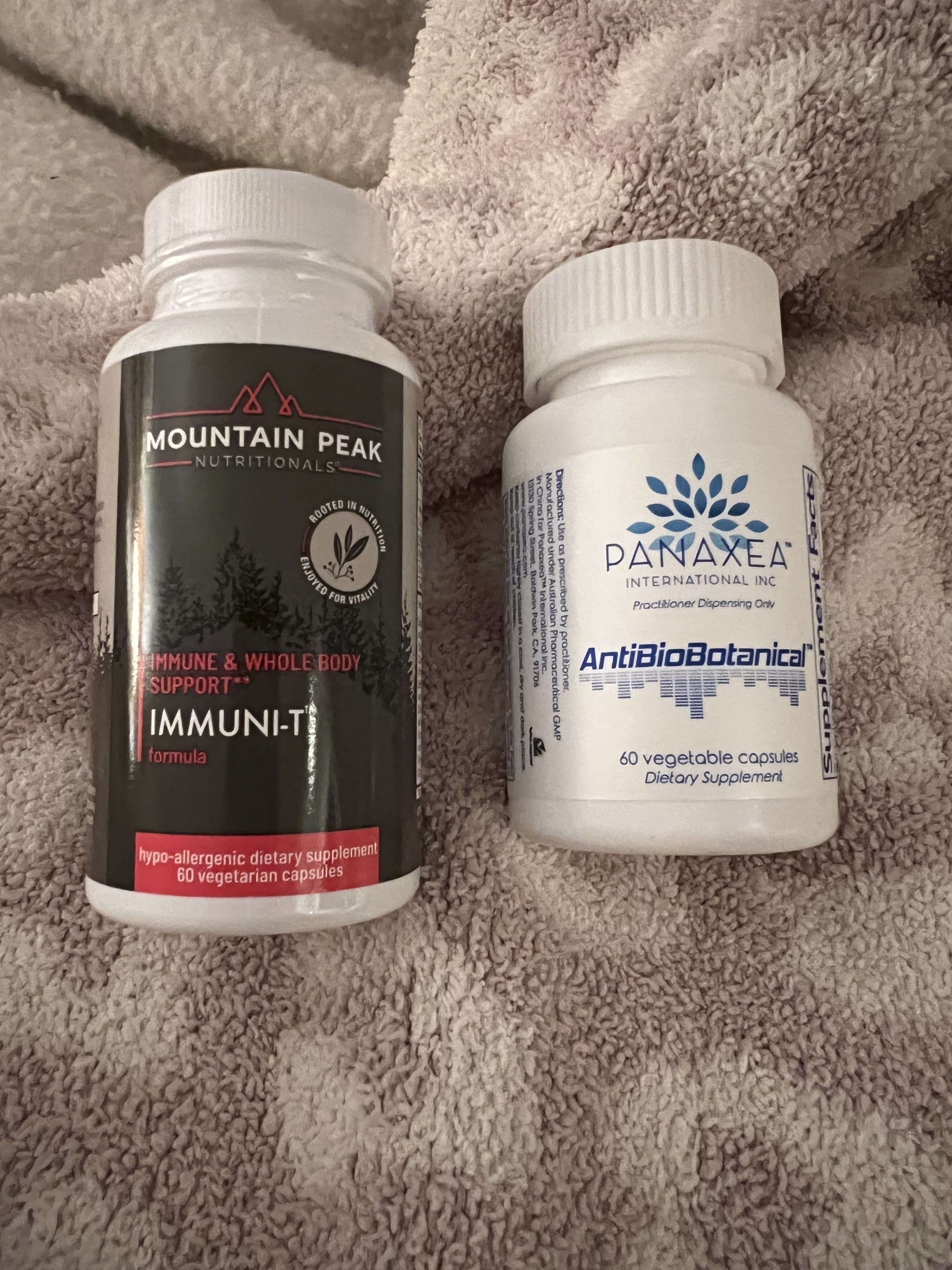
When it comes to the winter season I have my two favorite blankets and two favorite immune support supplements. It is hard to choose a favorite! Sometimes it depends upon the day. Barefoot dreams take me through all the seasons much like Panexea AntiBioBotanical. Yet; a heavy wool blanket and Immune-T give the extra weight you may need during the cold winter nights. Which would you choose? I am happy to consult on both throws and supplements! I'm a consumer of both! And if you can't decide there are times; like Daisy suggests when you need both!

Hello; listing my two favorite supplements to have on hand as immune support for both viral and to help prevent bacterial infections. If you would like more information on either of these products or companies please don’t hesitate to call or email. Lettierome@gmail.com (602) 300-4870. Both supplements are resting on my favorite throw; also linked (no affiliation). 

Mountain Peak Nutritionals 

Panaxea - Info on Dr. Weber  some information will be blocked if not a practitioner; however the about and further info and links can be found on Dr.Weber 

Given my personal immune status and vulnerability, I take both of these as a baseline during cold/flu season. If I feel an acute illness coming on I increase to a therapeutic dose.

Neither company can be found on Amazon or other nonmedical sites so if you see it there please buyer beware. 

Immune-T is an excellent combination of vitamins, herbals, and mushroom blend. Immune T has a higher dose of Vitamin A which is an excellent antiviral. Vitamin A like its cousin D is fat soluble; therefore it’s best to take with food. The immune-T dosage has the upper recommended dose for Vitamin A; therefore should be used with care at more than two capsules per day for an extended time period. Mountain Peak has a chronic immune formula; Immune-LT that does not have Vitamin A so can be taken safely as a preventative.

The second is one of my favorite companies Panexea; founded by Daniel Weber, PhD MSC. Dr. Weber is a prolific author, speaker, practitioner, and leader of the team that creates research-based formulas. Besides AntiBioBotancial; a broad spectrum antibacterial and antiviral formula they have added two products specifically for viruses including SARS and specifically the multi-organ system effects of COVID-19. Panexea is an Australian company whose products are held to pharmaceutical standards.

Finally, my favorite leopard print throw - which is a toss-up to the wool blanket. I coveted this Barefoot Dreams blanket for years before I  purchased it and then was gifted a second one! It’s a splurge item that I haven't regretted; it feels like a warm hug. I just checked they are having a sale! Hurry that doesn’t come often. Barefoot Dreams. The other throw shown above where Daisy can’t decide was one of my favorite Christmas Gifts.  Unfortunately, that pattern is no longer available; however, a good wool blanket will last you a lifetime. Wool makes a huge difference in warmth so you can turn down the heat and get tucked in for the night! Wishing you all sweet dreams and a Happy Post-Thanksgiving weekend. 

Disclaimer: The Information in this post is for general informational purposes only. Please contact your personal medical provider when making any changes to your health routine. Always use caution when pregnant or breastfeeding. If you are suffering from a fever, difficulty breathing, or continued cough please see your doctor immediately to rule out more serious conditions. As always; be safe and in the best health. Heather 


Disqus for Festzeit